A sector under pressure
The first part of the meeting centered on a tour de table, where participants shared what is currently at stake within their organizations and sectors. A recurring theme was the growing pressure on craft education across different levels. Many participants pointed to the discontinuation of programs and the impact of policy decisions, particularly changes in funding structures and increased enrolment fees.
Several organizations noted that financial thresholds are becoming too high for learners, leading to a drop in participation and raising concerns that craft education risks becoming inaccessible or elitist. At the same time, institutions face difficult internal shifts: teachers losing positions, being reassigned to subjects outside their expertise, or navigating increasing administrative burdens. These developments contribute to a broader sense of instability and frustration, often linked to a perceived lack of long-term vision in policy.
Tensions were also highlighted between different educational formats. While alternative pathways such as dual learning, internships, or individual training trajectories exist, they are often experienced as insufficient for transmitting the depth of craft knowledge. The importance of sustained, hands-on learning trajectories remains a key concern. Participants also pointed to inconsistencies in policy: while the importance of craftsmanship is increasingly acknowledged rhetorically, concrete measures do not always align with this recognition.
Fragmentation and misalignment
Across the discussion, a strong sense of fragmentation emerged. This fragmentation manifests both within the educational landscape (between adult education, higher education, and entrepreneurial training) and at the policy level, where different agendas and frameworks do not always connect. Some participants noted that responsibilities are often shifted between institutions and policymakers, leading to a lack of clarity and accountability.
The increasing emphasis on entrepreneurship within certain training contexts was also discussed. While self-employment is a valuable pathway, participants expressed concern that it is being positioned too narrowly as the primary outcome of craft education. This leaves little room for alternative trajectories and risks overlooking the broader societal and cultural value of crafts.
In addition, the group reflected on the position of teachers and trainers. Barriers within teacher training, administrative overload, and a lack of tailored pathways for craft practitioners were identified as structural challenges. These factors make it more difficult for skilled craftspeople to enter education and pass on their knowledge.
Rethinking value and visibility
A central theme that emerged throughout the meeting was the question of how crafts are perceived and valued in society. Participants reflected on the persistent image problem surrounding crafts, often associated with hobbyism, nostalgia, or marginal activities. This perception contrasts sharply with the complexity, relevance, and contemporary potential of craft practices.
The group emphasized the need to articulate more clearly what crafts represent today, beyond heritage alone. This includes recognizing embodied knowledge, intergenerational transmission, and the social and cultural dimensions of making. There was also a call to critically reflect on dominant value systems that prioritize efficiency and economic output, often at the expense of other forms of knowledge and practice.
From this perspective, improving the visibility and understanding of crafts becomes a key lever for change. Ideas discussed included public awareness campaigns, stronger alignment with existing initiatives such as the Dag van de Ambachten (national crafts’ day event) and exploring platforms like maker fairs. The importance of language and terminology was also highlighted, as different terms (maker, designer, craftsperson) carry different connotations and implications.
From reflection to action
Building on previous sessions, the group moved towards identifying concrete action points. Four overarching themes were formulated as shared areas of concern: the image of crafts, the need for better support mechanisms when programs are at risk, the role of learning beyond formal education, and the question of how to engage decision-makers more effectively.
Participants collectively chose to focus further on the theme of image and value frameworks. Several potential actions were identified, including strengthening communication around crafts, connecting with existing public initiatives, and exploring ways to map and visualize the landscape of craft education and practice.
Concrete next steps were assigned within the group, ranging from establishing contacts with external initiatives to exploring opportunities for joint visibility at public events.
Looking ahead
The session concluded with a brief discussion on future steps and upcoming meetings. Topics such as professional qualifications and bottleneck professions will be addressed in the next working group. There was also a clear intention to continue building on the actions related to image and visibility.
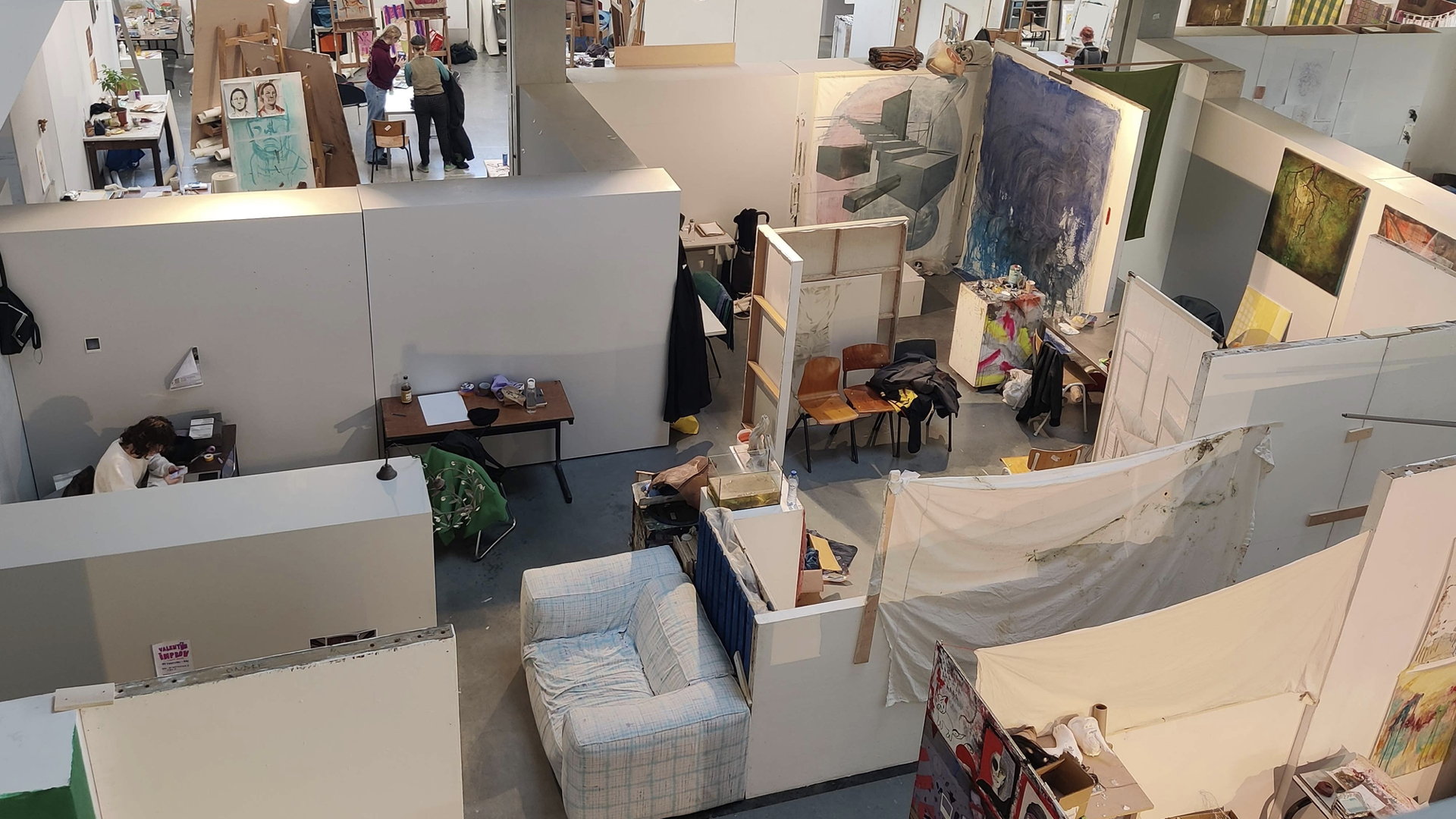
To conclude, participants were invited for a tour of Sint-Lucas Antwerp. We had the opportunity to explore the studios while students were preparing their work for the upcoming master’s exhibitions. Guided by the school’s director, the visit offered valuable insight into the learning environment and the diversity of practices within higher art education. It provided a fitting close to a session focused on both the challenges and the continued relevance of craft education today.